ServicesWhole-Home Filtration
Whole-Home Filtration in The Colony, Sized to Your Plumbing
Point-of-entry filtration treats water on the main line, before it branches to the kitchen, the showers and the washer. We size the carbon tank to your peak flow and plumb it with a bypass. If you already own a system, we check whether it can be fixed before quoting anything new.
What a Whole-Home System Does and When It Fits
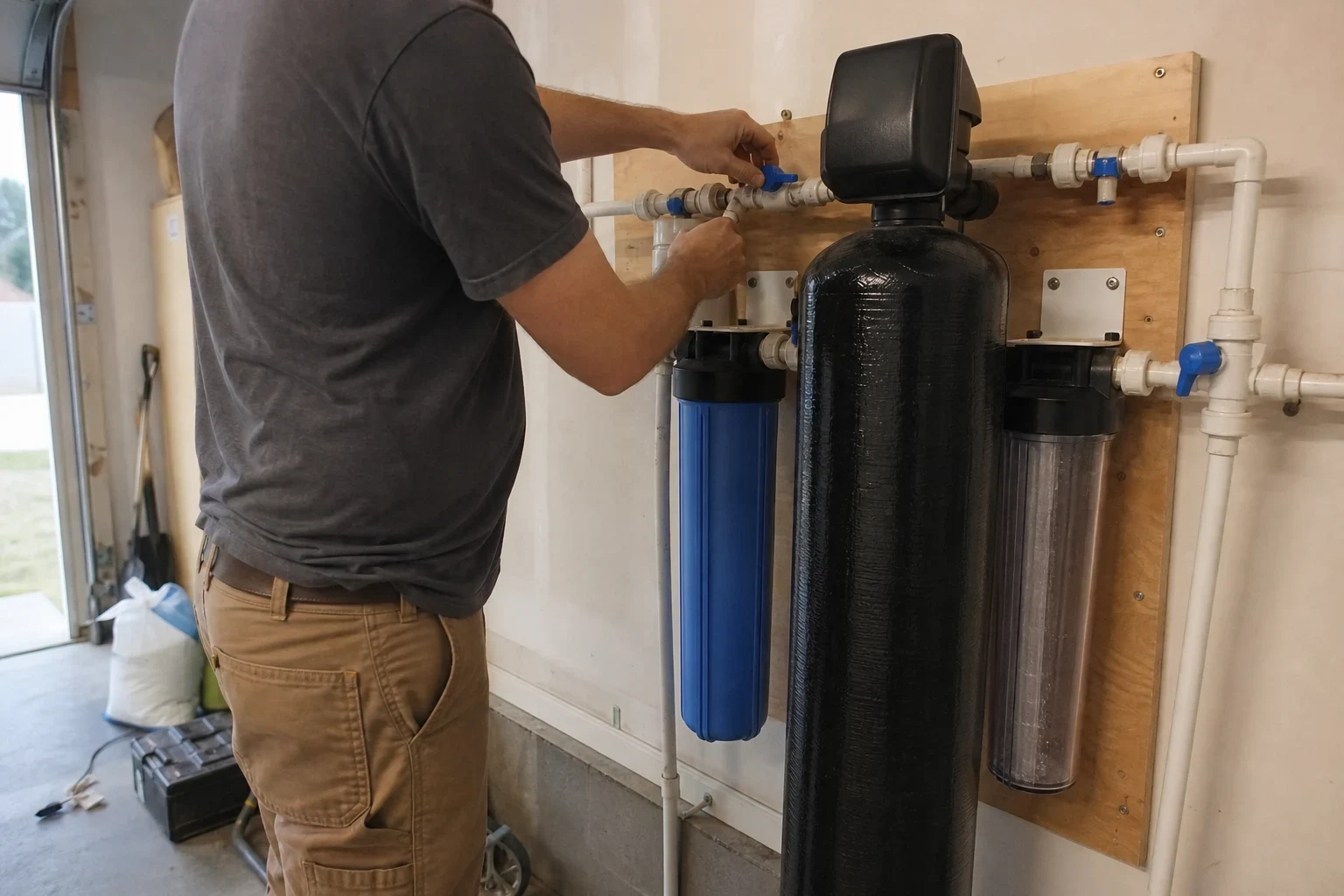
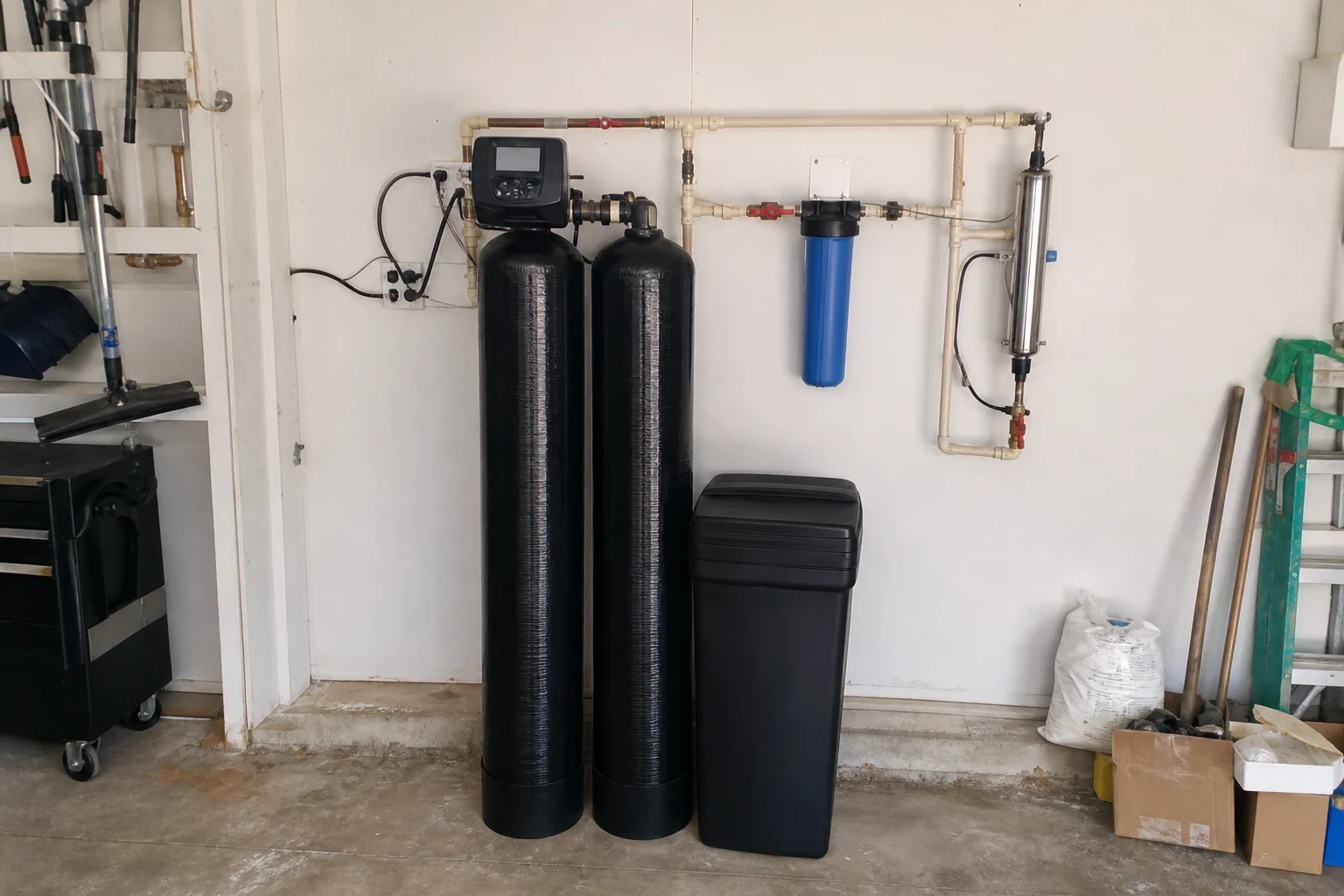
A point-of-entry filter sits on the main water line, usually near where it comes into your home. Water passes through a sediment prefilter that catches sand and pipe scale, then through a tank of catalytic carbon that adsorbs the chlorine or chloramine your utility uses for disinfection. That is the part most people notice: the pool smell in the shower fades and coffee tastes like coffee.
It is the right call when the complaint is everywhere in your home, not just at one faucet. If you only want cleaner drinking and cooking water, an under-sink reverse osmosis unit is often the better buy. If spotting and scale are the problem, carbon will not fix that, and we will talk about water softeners instead.
Many homes already have a filter that has stopped working. Often the cause is spent media, a cracked housing or a bypass valve left half open. We check those parts first and tell you plainly whether a repair restores it or whether the tank has reached the end of its life.
What the Work Includes
- Sediment prefilter
- A cartridge housing ahead of the carbon tank traps grit before it can clog the media. Changing this cartridge on schedule is the cheapest way to make the carbon last.
- Catalytic carbon media tank
- Catalytic carbon handles chloramine better than standard granular carbon. We size the tank so water spends enough contact time in the media at your peak flow, which is what actually removes taste and odor.
- Three-valve bypass loop
- A bypass lets you shut the system out of the line for service without cutting water to your home. It also means future service is a short visit.
- Fittings matched to your main
- Most homes run a 3/4-inch or 1-inch main. We match the port size so the filter does not choke your water pressure upstairs when two showers run at once.
- Repair of an existing system
- We replace worn O-rings, cracked sumps, stuck control valves and exhausted media when the tank and head are sound. If they are not, we show you why and quote a new system.
Signs Your Home Could Use Whole-Home Filtration
Pool smell in a closed bathroom
Warm shower water lets dissolved disinfectant escape as vapor, so the odor builds in a small room with the door shut. A filter on one faucet never touches that water.
Odd taste at every faucet
If the bathroom sink tastes the same as the kitchen, the issue is the supply, not one fixture.
Dry skin and faded laundry
Chlorine is an oxidizer. Some families notice drier skin and hair, or darks fading faster, and filtering at the main addresses both.
Grit in aerators and showerheads
Fine sediment collecting in screens means it is also reaching your water heater and appliance valves.
An old filter that no longer helps
Low pressure, a returning taste or a dripping housing usually point to a clogged cartridge or failed seal. That is often a fix, not a new system.
What Moves the Price
Whole-home filtration has more variables than a countertop unit, so we price after we see your home. The biggest drivers are the size of the system and how easy it is to reach the main line. Fixing a sound system usually costs well under a new one, which is why we check that first.
Flow rate and household size
More bathrooms and more people mean a larger tank and more carbon to keep contact time up at peak use.
Media type
Catalytic carbon for chloramine costs more than standard carbon. We recommend it only when your water calls for it.
Access to the main line
An open line in the garage is simpler than one behind finished walls or under a slab entry. Extra piping, a new shutoff or a drain line adds labor.
Repair versus new equipment
Replacing media, seals or a cartridge housing keeps your existing head and tank in service. A cracked tank or failed control head means replacement makes more sense.
How a Job Runs
- 1
Start with the water
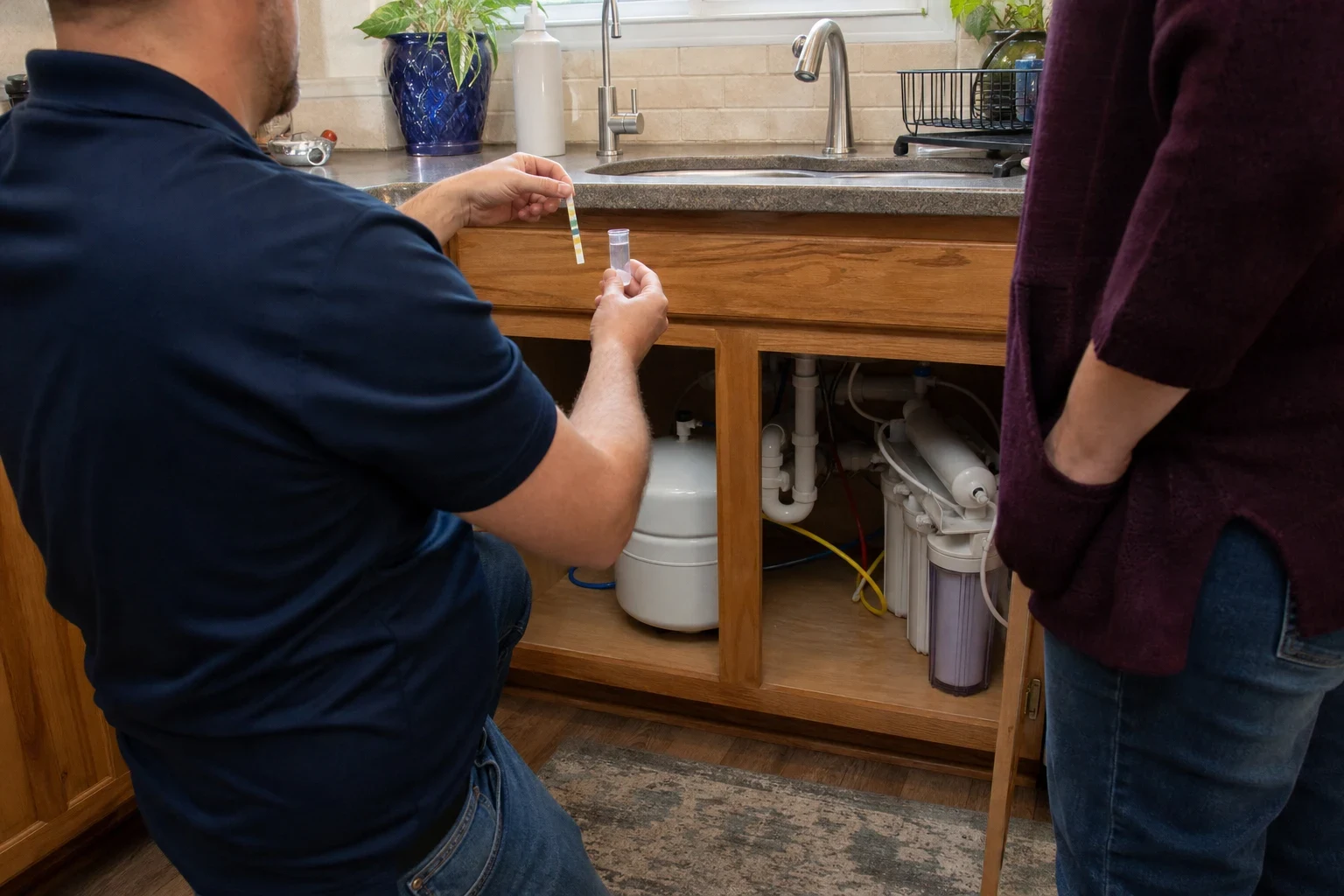
First we test your water and put the readings in a written water report, so you can see the numbers behind anything we suggest. If carbon will not solve your complaint, we tell you that up front.
- 2
Look at the plumbing
We check the main line size, where it enters your home, the shutoff valve and the space available. On an existing system we inspect the head, tank and seals before suggesting anything new.
- 3
Quote by phone and in writing
You get a line-item quote showing the equipment, fittings and labor. Standard professional installation included for qualifying homes.
- 4
Install day
We shut off the main, cut in the bypass loop, mount the prefilter and tank, then backflush the new carbon until the water runs clear. Your water will be off for a stretch while we cut into the line, and we give you the timing before we close the valve.
- 5
Walkthrough and cleanup
We show you the bypass valves and how to change the prefilter cartridge, then clear out packaging and wipe down the work area.
Whole-Home Filtration Questions
Will a whole-home filter lower my water pressure?
Not if it is sized for your home. When people do feel a drop, the culprit is typically a tank too small for the flow, inlet ports narrower than the main, or a sediment cartridge packed with grit. We match the tank and fittings to your busiest hour of water use so two showers and the dishwasher can run together.
How often does the carbon need replacing?
It depends on tank size, how much water your home uses and the disinfectant level. The sediment prefilter needs changing far more often than the carbon. We explain the schedule for your system at the walkthrough.
Can you fix the filter that came with my house?
Often, yes. Spent media, a worn O-ring or a stuck valve can be replaced on most systems if the tank and head are in good shape. If the tank is cracked or parts are no longer available, we show you what failed and quote a new unit.
Does this soften my water too?
No. Carbon removes chlorine, chloramine and taste and odor compounds, but it does not remove calcium and magnesium. If the test shows hardness causing scale, a water softener can be added alongside the filter.
Do I still need reverse osmosis for drinking water?
Not always. For a lot of households, carbon-treated water from the kitchen sink is plenty. When you want lower dissolved solids or one more stage for the water you drink and cook with, an under-sink reverse osmosis unit works well alongside a whole-home system.
Find Out What Your Water Needs
We will look at your water and your existing equipment, then tell you whether a repair will do or a new system is worth it. We serve The Colony and nearby towns including Frisco, Lewisville and Little Elm.