ServicesWater Softeners
Water Softeners in The Colony
We check your water's hardness, then tell you plainly whether a softener makes sense. If you already own one that has stopped working, we trace the failed part first. A new unit only comes up when fixing the old one no longer adds up.
What a Softener Does, and When It Is the Right Call
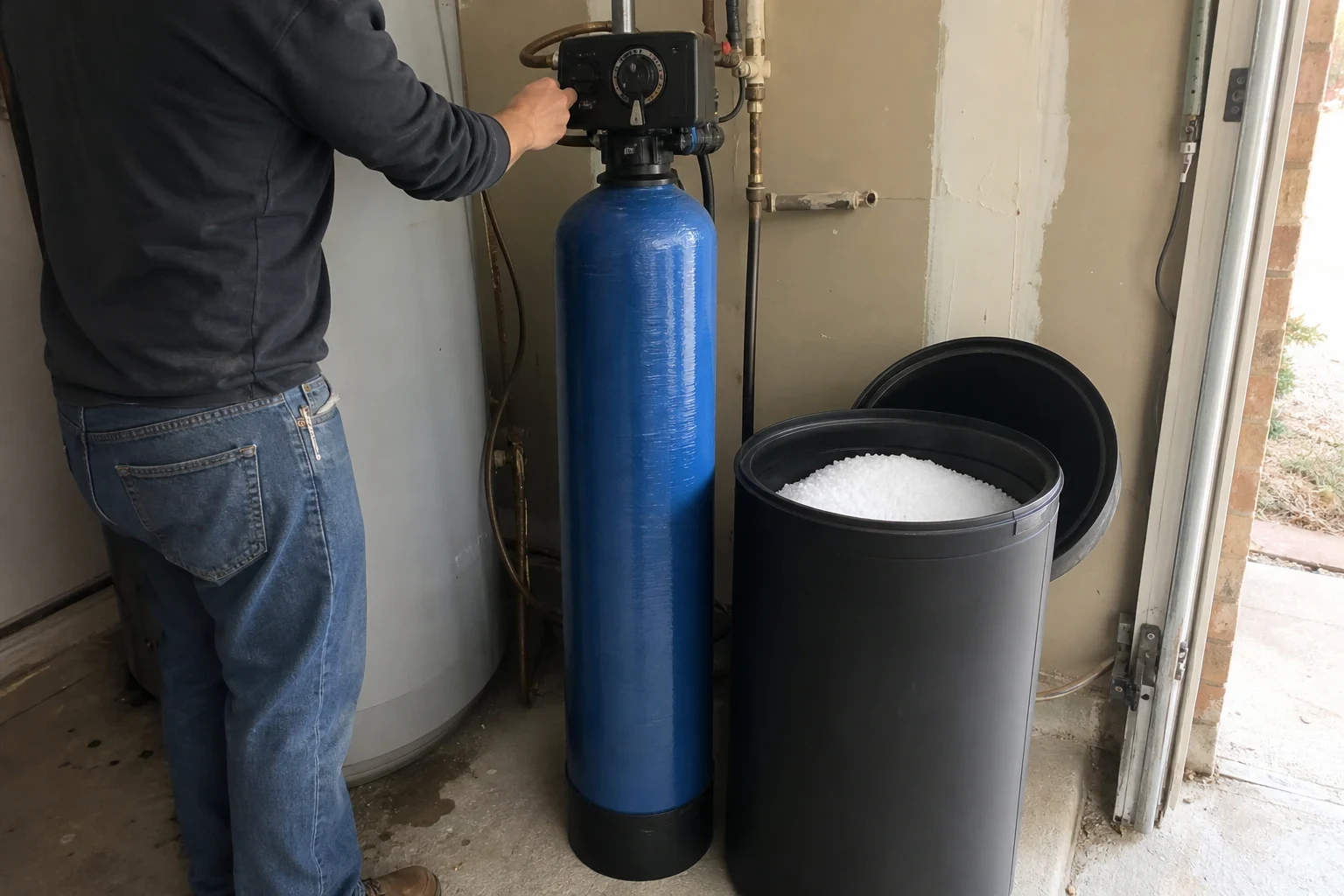
Hard water carries dissolved calcium and magnesium. Over time those minerals crust on faucet aerators, haze your glassware and settle as scale in the bottom of your water heater. A softener pulls them out by ion exchange. Water flows through a tank of resin beads loaded with sodium or potassium ions, the beads swap those ions for the hardness minerals, and a periodic brine rinse recharges the beads so they can do it again.
Softening and filtering are different jobs. Ion exchange leaves chlorine taste and smell untouched, and it won't catch sediment or microbes. When taste is what bothers you, whole-home filtration or reverse osmosis usually earns its place better, and we will tell you that.
Plenty of softeners that look finished are not. A cracked injector, a stuck control valve or a hardened salt bridge can halt regeneration while the resin is still healthy. Those are the first places we look.
What Our Softener Work Includes
- Hardness reading before any recommendation
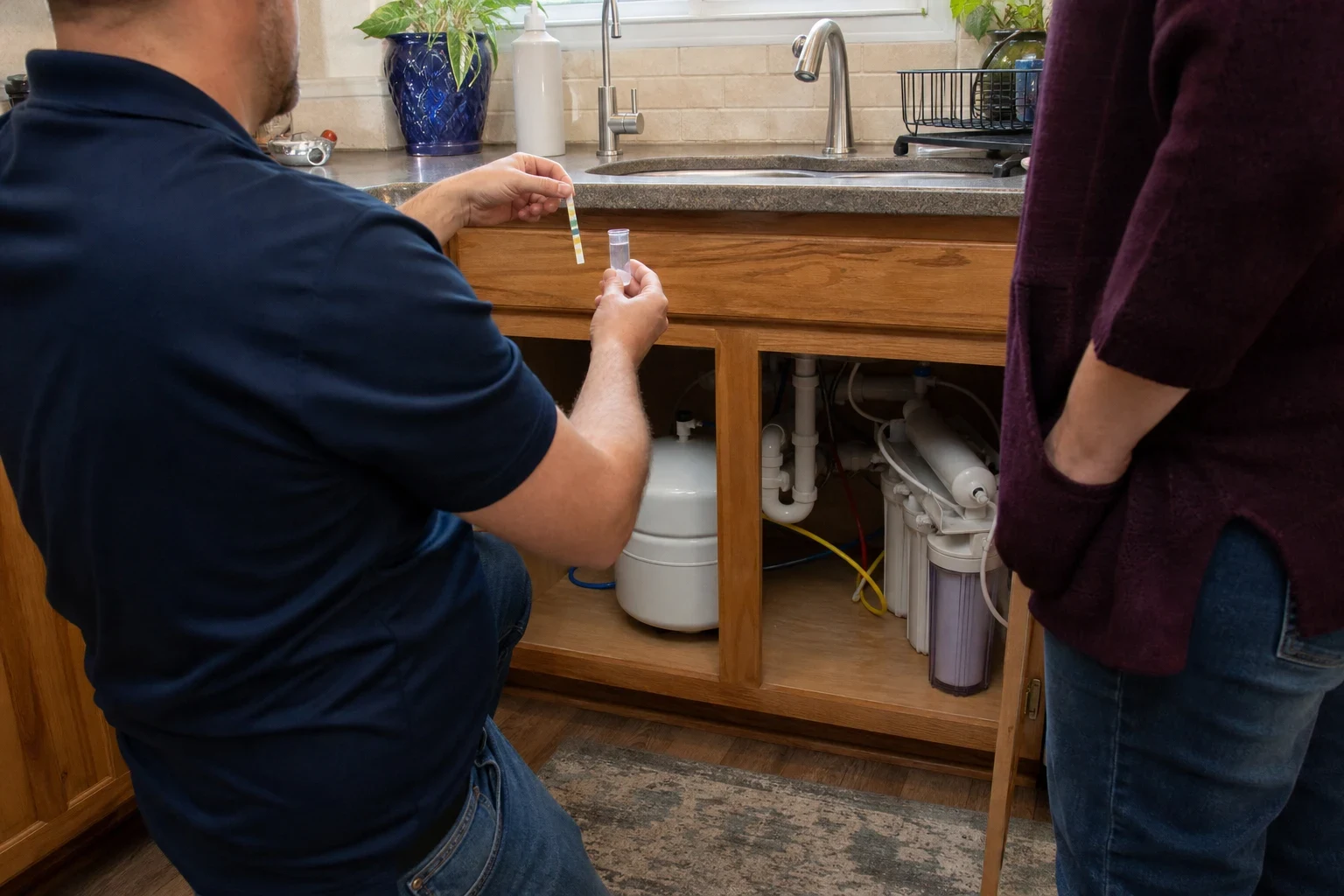
- We measure hardness at your tap so the decision rests on your own water. Every caller can ask for a water test and a written water report. If the number comes back low, we tell you a softener is not worth the money.
- Diagnosis of an existing unit
- We check brine draw, the venturi injector, the control valve seals and pistons, the brine tank float and the resin bed. Each finding is explained in plain terms, with the part named.
- Fixes with standard parts
- Injectors, seal and spacer kits, float assemblies and timers can usually be swapped in one visit. When the resin is fouled or worn out, we can rebed the tank instead of buying a whole new system.
- Sizing a new system
- Grain capacity is matched to your hardness reading and household water use. An oversized unit wastes salt between regenerations, and an undersized one runs out mid-week.
- Installation with a bypass valve
- We add a bypass valve so the softener can be isolated whenever it needs service. The drain line gets an air gap so wastewater cannot siphon back into your home's supply, and we program regeneration to your usage. Standard professional installation included for qualifying homes.
Signs Your Softener Needs Attention
Salt level never drops
If the brine tank stays full for weeks, the unit is likely not drawing brine. A clogged injector or a salt bridge, a hard crust that forms above the water line, is the usual cause.
Spots and scale are back
Returning film on glass shower doors means hard water is getting through. The resin may be exhausted, or the bypass valve may have been left partly open.
Water in the brine tank keeps rising
An overfilled brine tank often points to a worn float or a control valve that is not shutting off the refill. Left alone, it can overflow onto the floor.
Resin beads in the plumbing
Small amber beads in an aerator or toilet tank mean the distributor tube or its screen has cracked. That tube can be swapped on its own while the rest of the system stays.
Salty taste after regeneration
Water that tastes salty after a cycle suggests the rinse is being cut short. The timer settings or valve may need adjustment.
How a Softener Visit Runs
- 1
Phone call and scheduling
You describe what you are seeing and how old the unit is, if you have one. We set a time and tell you what we will check.
- 2
Hardness test and inspection
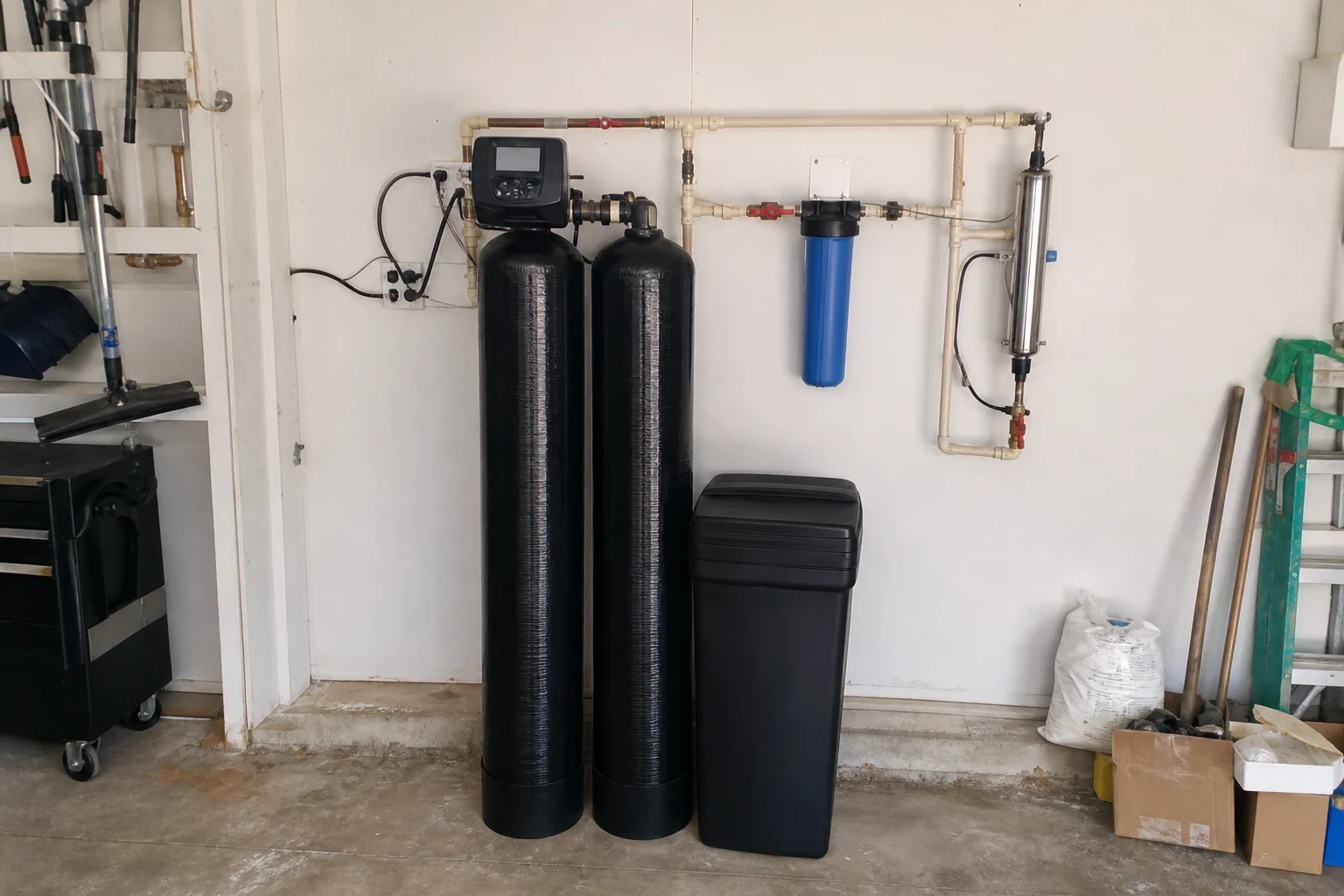
We read hardness at a cold tap, then inspect the existing softener if there is one. In many North Texas homes it sits in the garage, so we confirm there is room for a drain line and service access.
- 3
Repair or replace, explained
We name the part that failed and say whether fixing it fits the unit's age and condition. When the valve body itself has split, or the manufacturer stopped making its parts, a new system is the sensible path and we walk you through the reasons. Then you get a quote by phone or in person.
- 4
The work and cleanup
Service work and installs are done with the water shut off only as long as needed. We test softened water at the tap before we leave and take away all packaging and old parts.
What Moves the Cost
A repair is usually one part plus labor, so it costs far less than a new system. For a new softener, the price depends on capacity, the type of control valve and what the plumbing needs at your install spot. We give you a clear quote once we have seen the setup.
- Fixing versus a new unit
- Swapping an injector, float or seal kit is a small job. A resin rebed costs more, and a new system more again.
- Grain capacity
- Higher hardness or more people in your home calls for a larger resin tank, which raises the equipment cost.
- Control valve type
- Metered, demand-initiated valves cost more than simple timer valves but regenerate only when needed, which saves salt and water over time.
- Plumbing at the install location
- An existing softener loop with a drain nearby keeps labor simple. Adding a loop, rerouting copper or PEX, or running a long drain line adds time and material.
Water Softener Questions
Something not covered here? (972) 284-7819
Do I actually need a softener?
Only if your hardness reading supports it. With fairly soft water, a softener mostly brings salt bags and maintenance without much gain. We test first and point you elsewhere if that serves you better, such as whole-home filtration for chlorine taste.
My softener is old. Should I just replace it?
Not automatically. Age alone doesn't settle it. If the tank and valve body are sound and parts are still made, a fix or resin rebed can keep it running for years. We recommend a new unit when the valve housing is cracked, parts are discontinued or the bill would approach the price of new equipment.
Will softened water taste salty?
A properly working softener adds a small amount of sodium that most people cannot taste. A salty taste usually means the rinse cycle is too short or the valve is not sealing. If you prefer, potassium chloride can be used instead of sodium chloride, and reverse osmosis at the kitchen sink removes most of it from drinking water.
How much maintenance does a softener need?
Mostly adding salt and breaking up any crust in the brine tank. Keeping the salt level at about half full, rather than packed to the top, helps prevent salt bridges. An occasional check of the injector screen keeps brine draw steady.
Does a softener remove bacteria or chlorine?
No. Ion exchange targets hardness minerals only. For chlorine we suggest carbon filtration, and for microbial concerns UV water treatment is the tool designed for that job.
Find Out What Your Softener Really Needs
Tell us what you are seeing at the tap or the brine tank. We will check your hardness, find the cause and give you an honest repair-or-replace answer.