ServicesUV Water Treatment
UV Water Treatment in The Colony, Sized to Your Flow
A UV system adds a second line of defense against bacteria, viruses and cysts without chemicals or a change in taste. We size the chamber to your home's peak flow, fit the prefilter it needs, and repair existing units when a lamp or sleeve is the real problem.
What UV Treatment Does and When It Makes Sense
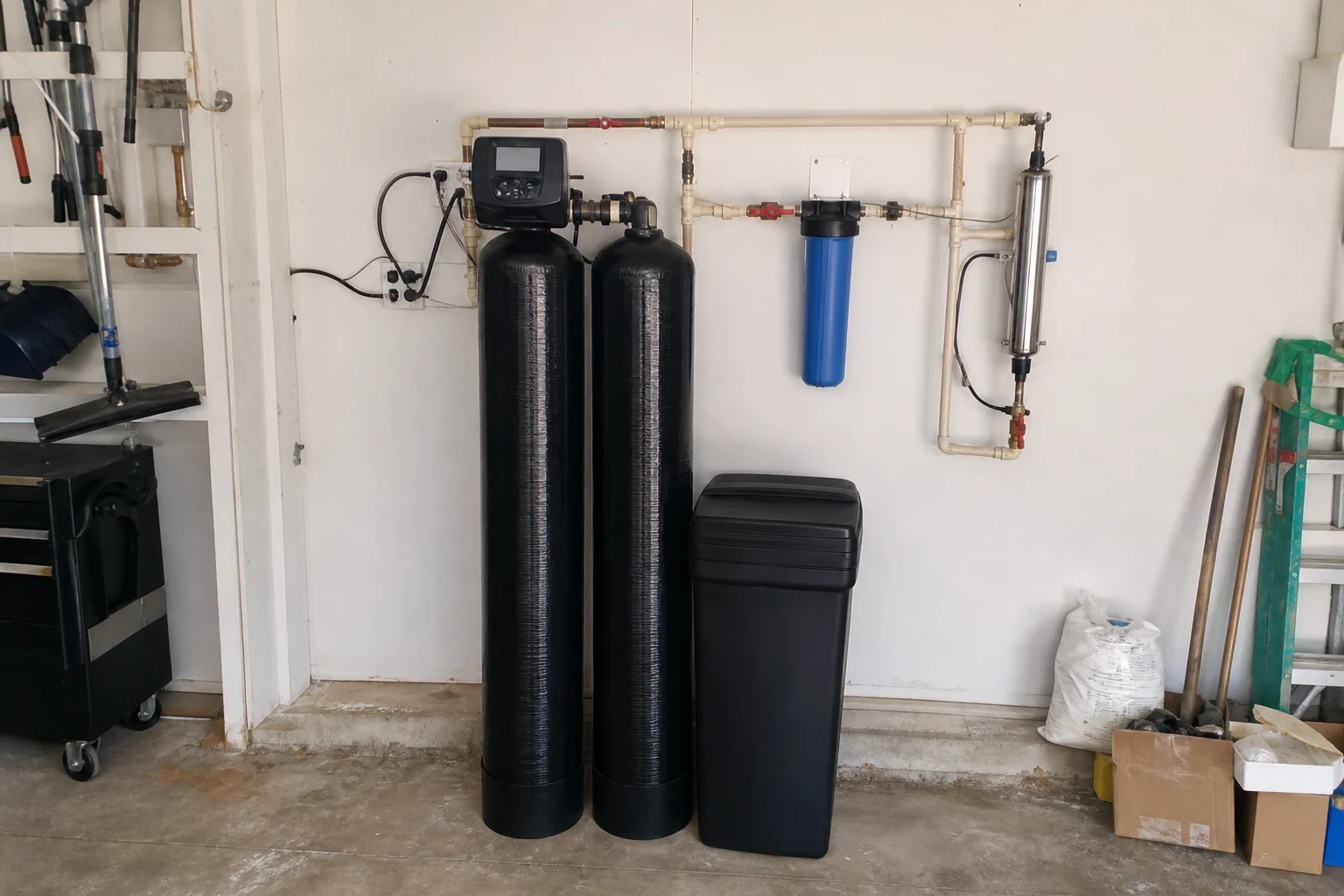
A UV system is a stainless steel chamber with a mercury-vapor lamp inside a quartz sleeve. As water passes the lamp, UV-C light at 254 nanometers scrambles the DNA of bacteria, viruses and protozoa like Giardia and Cryptosporidium so they cannot reproduce. Nothing is added to the water, and nothing is taken out. That last part matters: UV does not remove chlorine, sediment, lead or minerals.
City water is already disinfected, so for most homes UV is an added layer, not a necessity. It makes sense when you want protection that keeps working downstream of the treatment plant, during a boil-water notice after a main break, or when someone in your home has a weakened immune system. We will tell you plainly if a whole-home filtration or reverse osmosis system answers your concern better.
What Our UV Installation and Service Includes
- Chamber sized to peak flow
- We count fixtures and estimate your home's peak gallons per minute, then pick a unit rated to deliver a full UV dose at that flow. An undersized chamber lets water pass too quickly for the light to do its job.
- Sediment prefilter
- Particles cast shadows that microbes can hide in. We install a 5-micron sediment cartridge ahead of the chamber, and a carbon stage if your water calls for it, so the light reaches every drop.
- Bypass loop and shutoffs
- A three-valve bypass lets you keep water flowing while the lamp or sleeve is changed. It also makes future service faster, which keeps your cost down.
- Electrical and alarm setup
- The ballast needs a dedicated, grounded outlet near the unit. We mount it off the floor and test the lamp-failure alarm so you know when the system stops treating.
- Service on units you already own
- If you already have a UV system, we check the lamp hours, sleeve clarity, ballast output and O-rings before talking about replacement. Most problems trace back to one of those four parts.
Signs Your Home Could Use UV Treatment or UV Service
Your UV alarm is beeping
Most controllers alarm when the lamp burns out or reaches its rated hours. A lamp can still glow after its UV-C output has dropped too far to disinfect, so a lit bulb is not proof it is working.
The lamp is past 12 months
Typical lamps are rated for about 9,000 hours of continuous use. After roughly a year, output falls even if nothing looks wrong.
A cloudy or stained quartz sleeve
Calcium and iron film on the sleeve block light the same way a dirty window does. Cleaning or replacing the sleeve often restores full performance without new equipment.
Concern after a boil-water notice
If a main break or pressure loss left you uneasy about what reaches your taps, a UV chamber at the point of entry treats water continuously as it enters your home.
A family member with health risks
Infants, older relatives and anyone with a weakened immune system are more sensitive to waterborne microbes. Many families add UV for that reason alone.
What Moves the Price of UV Treatment
UV pricing depends far more on your home's flow and water condition than on the lamp itself. We give you a written, line-item quote by phone or on site so you can see where each part of the cost comes from. Standard professional installation included for qualifying homes.
Flow rate and chamber size
A larger home with more bathrooms needs a higher-flow chamber and a longer lamp, which costs more than a compact unit.
Prefiltration needs
Clear water may need only a sediment cartridge. Hard or iron-bearing water may call for a softener or extra filtration so the sleeve does not foul within weeks.
Plumbing and power access
An open main line with an outlet nearby is quick work. Tight spaces, long pipe runs or a missing outlet add labor.
Parts swap versus new unit
Replacing a lamp, sleeve or ballast usually costs well under a full system. We price both options when fixing the old unit is realistic.
How a UV Job Runs on the Day
- 1
Look at the water and the plumbing
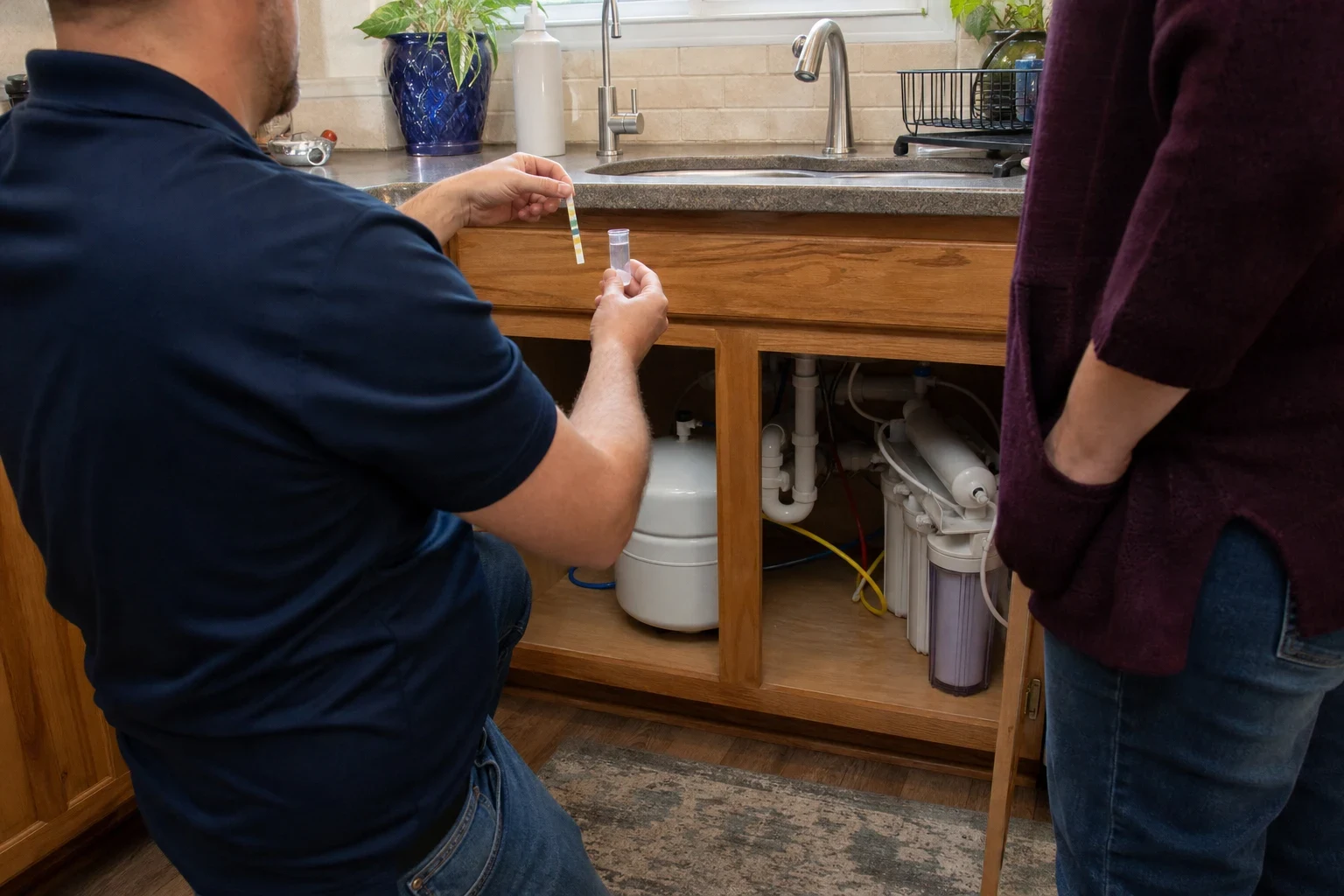
We check clarity, hardness and iron, since all three affect sleeve fouling. Next we trace the cold supply back to where it comes into the house and make sure a grounded outlet sits within reach of the ballast cord.
- 2
Repair or replace decision
For an existing unit, we test the ballast, inspect the sleeve and check lamp hours. If a new lamp and O-rings fix it, that is what we recommend. We suggest a new system only when the chamber is undersized, cracked, or parts are no longer made.
- 3
Plumb it in and sanitize the lines
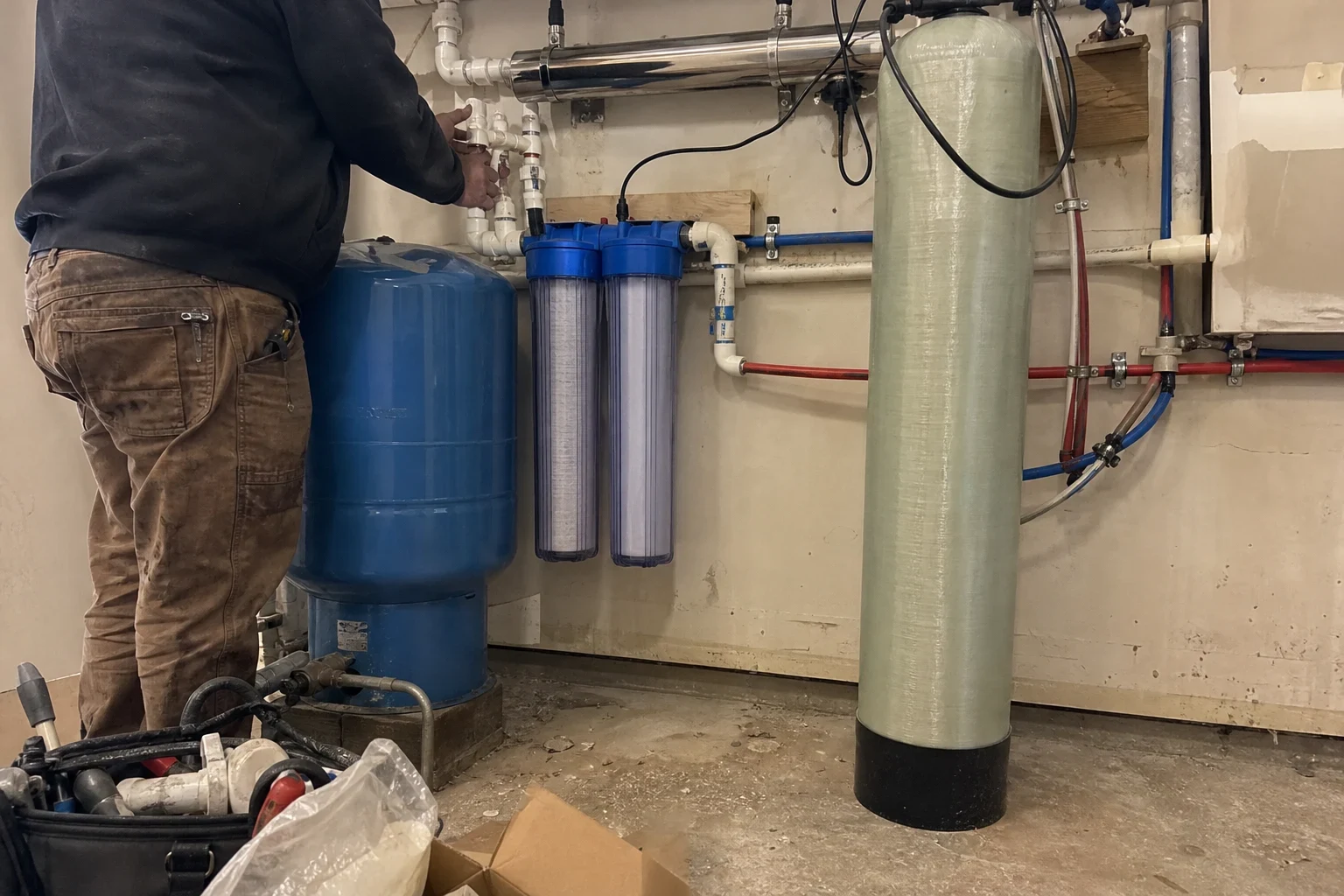
With the main valve closed, we tie the bypass, prefilter and UV chamber into the line and check each fitting as it goes together. The pipes downstream get a sanitizing pass before the lamp is energized, so bacteria already living past the unit are cleared out instead of left to recolonize.
- 4
Test and walk you through it
We power up, confirm the alarm works and check for leaks under pressure. You will see how to read the controller and when the next lamp and sleeve change is due, and we clean up the work area before we leave.
UV Water Treatment Questions
Will UV change the taste or smell of my water?
No. UV adds nothing and removes nothing, so taste and odor stay the same. If chlorine taste bothers you, a carbon whole-home filtration system is the right tool, and it pairs well ahead of a UV chamber.
Does UV remove chlorine, lead or hardness?
It does not. UV only disables living microbes such as bacteria and viruses. For lead and other dissolved contaminants at the kitchen sink, reverse osmosis is the better fit, and for scale a water softener addresses the minerals.
How often does the lamp need replacing?
Plan on once a year for most lamps, even if the bulb still glows. We clean or swap the quartz sleeve at the same visit, since a film on the glass cuts output as much as an aging lamp.
Can you fix the UV system I already have?
Often, yes. A failed ballast, a burned-out lamp or a cracked sleeve can each be replaced on its own. If the unit is too small for your flow or parts are discontinued, we will explain why a new chamber makes more sense.
Does the system use much electricity?
A residential UV lamp draws roughly the power of a standard light bulb and runs constantly. It stays on because a lamp that cycles on and off wears out faster and needs warm-up time before it treats water.
Find Out If UV Is Right for Your Home
Tell us what worries you about your water and what equipment is in place today. We will say whether UV, a simple parts swap or another system is the better fit, and walk you through the price before any work is scheduled.